
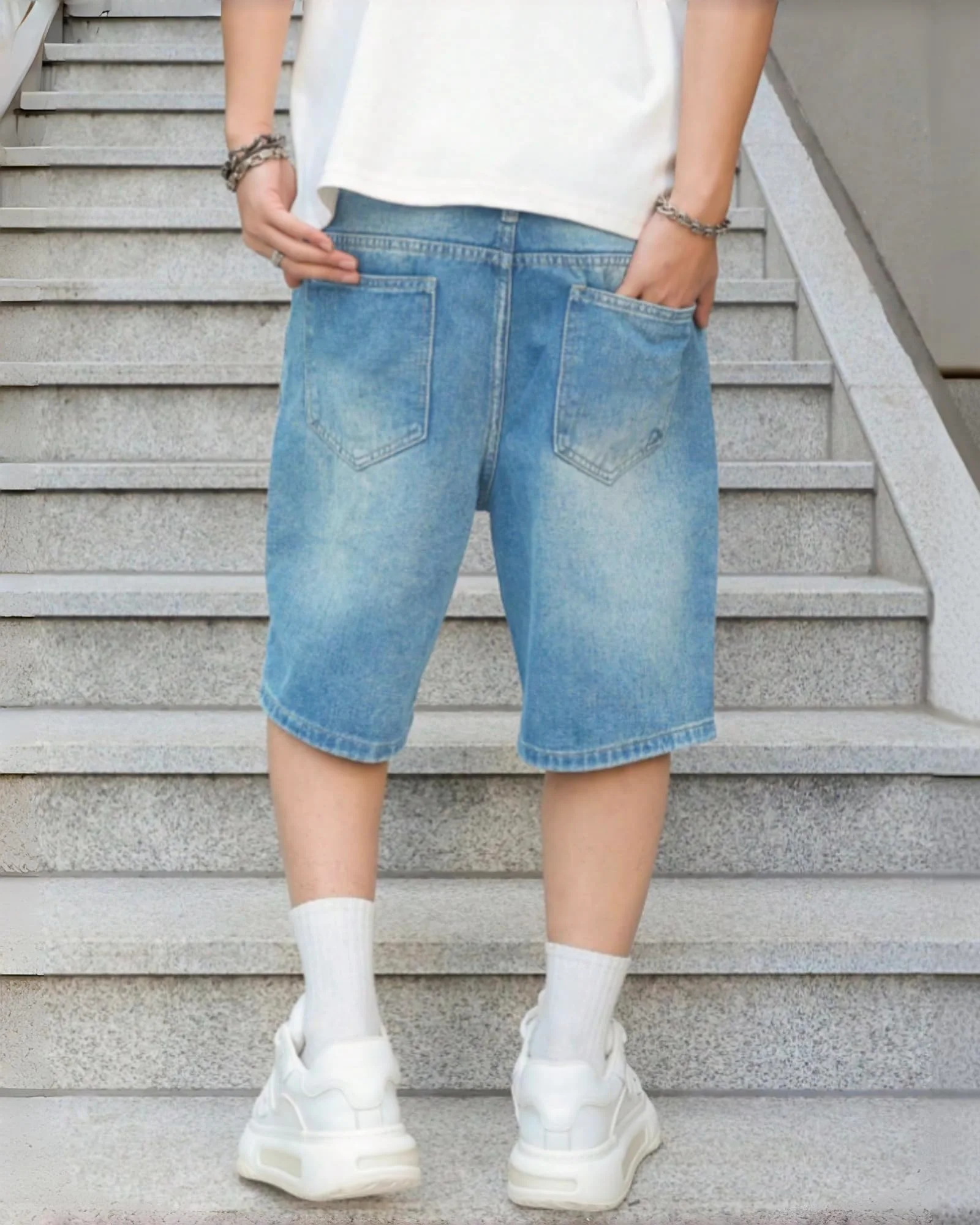
Put our baggy jort and our long jort side by side and the difference is a hand's width of denim, maybe a little more. On the leg, that hand's width decides whether your knee shows when you walk, whether a crew sock reads as part of the outfit, and whether the shorts look like shorts or like cropped jeans.
Here is how the three lengths in our range fall on the leg, and what each one asks from the rest of what you wear.
At the knee: the classic baggy jort
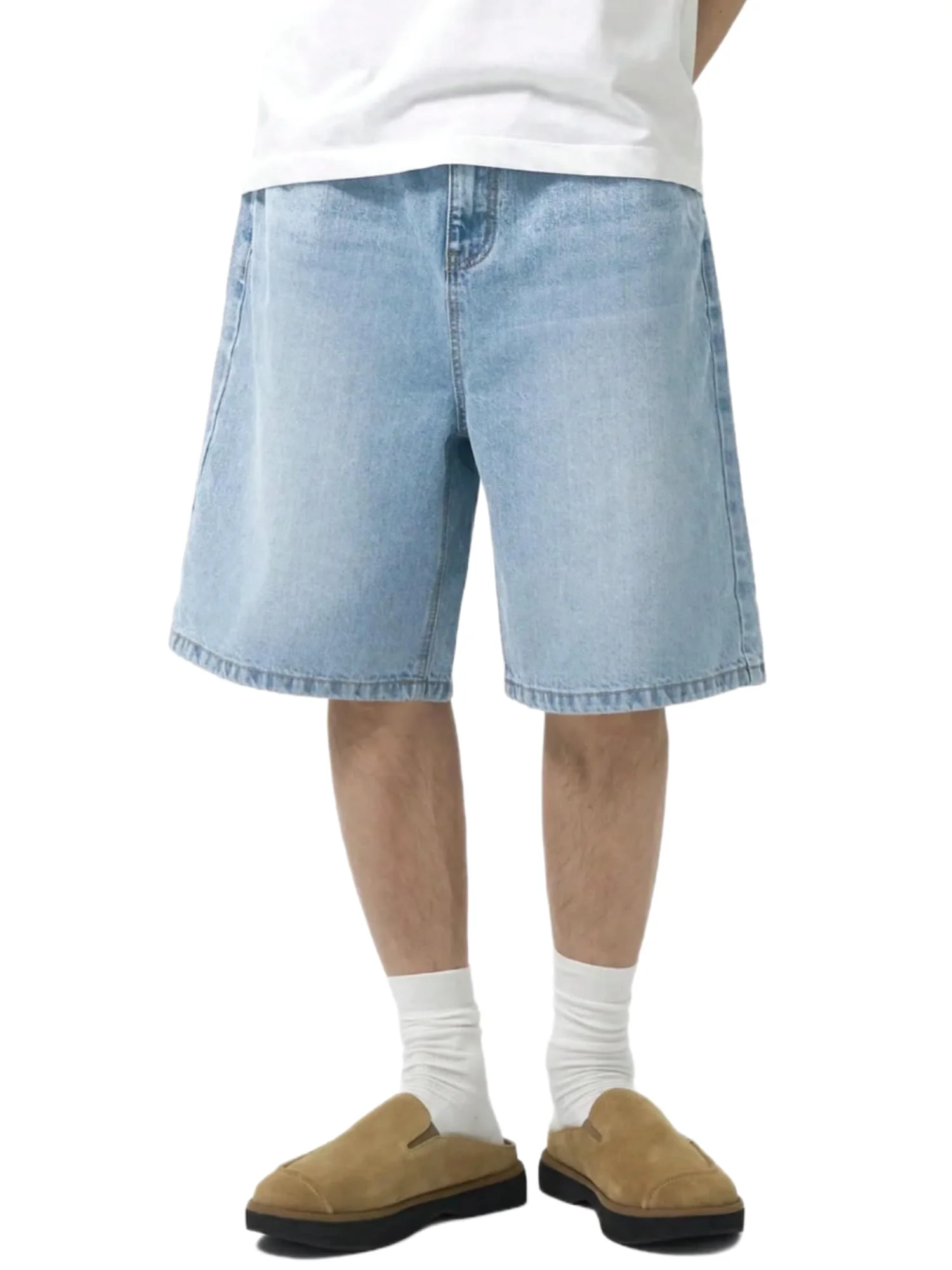
Our baggy jort is the one most people picture. The hem lands around the knee, sometimes just above it, sometimes covering it, depending on your height. The leg is wide from the hip down, so there is a visible gap between your thigh and the denim when you stand still.
This length is the easiest one to wear. It works with a plain white tee, a boxy short-sleeve shirt or a hoodie on a cool evening. Crew socks and a chunky sneaker balance the width of the leg. A slim, low-profile shoe can look lost under that much denim.
Past the knee: the long jort
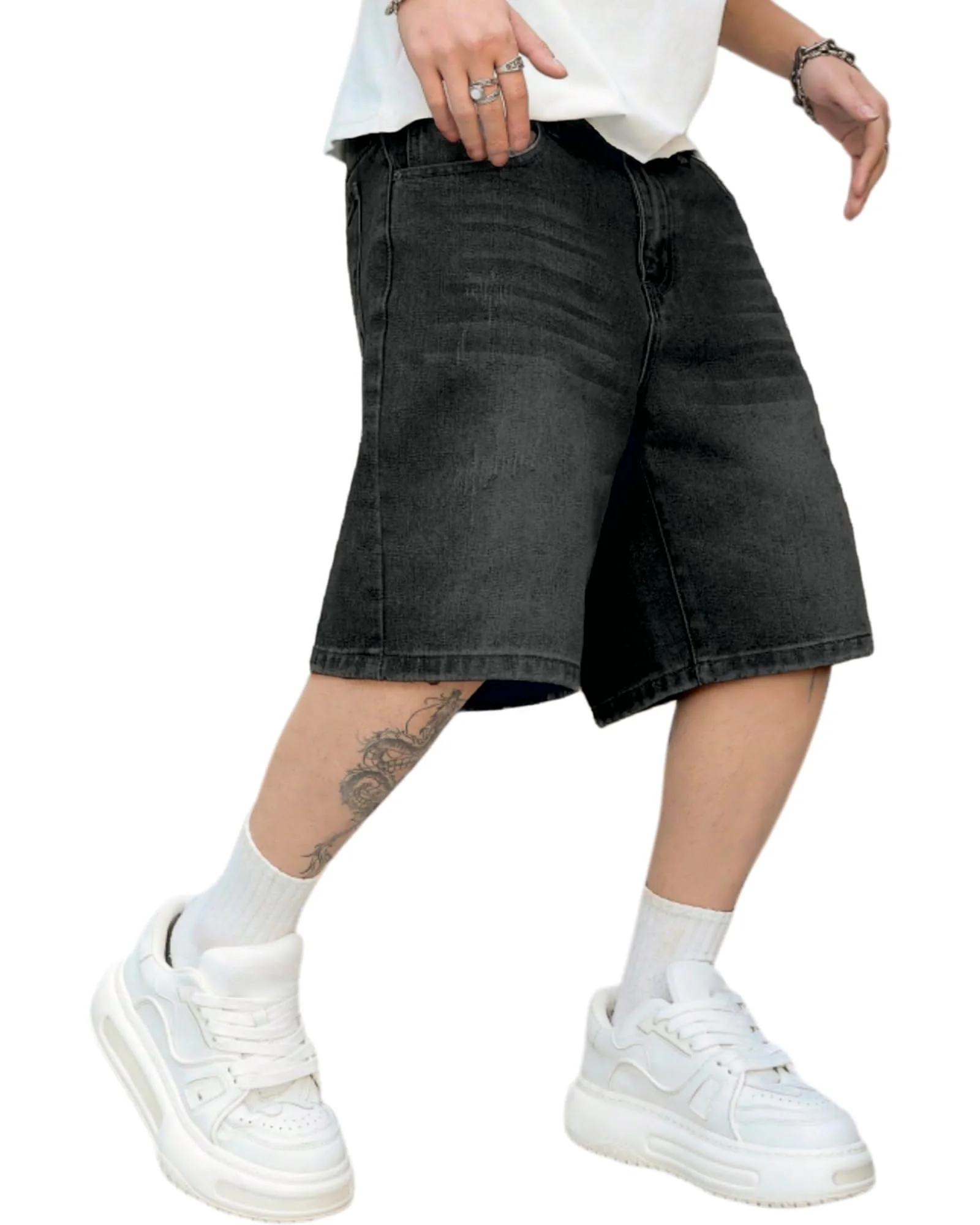
Our long jort keeps going past the knee toward mid calf. We think of it as capri length, and on a shorter frame it can read almost like a cropped pant. That is part of its appeal. It gives you the outline of a baggy jean with some air around your ankles.
Because more of the leg is covered, the top half can be bigger. An oversized tee, a work jacket or a heavy flannel all hold their own against it. Keep the shoe substantial. Long jorts over a thin canvas shoe tend to swallow the foot, while a skate shoe or a basketball sneaker holds the line.
Bermuda length for women
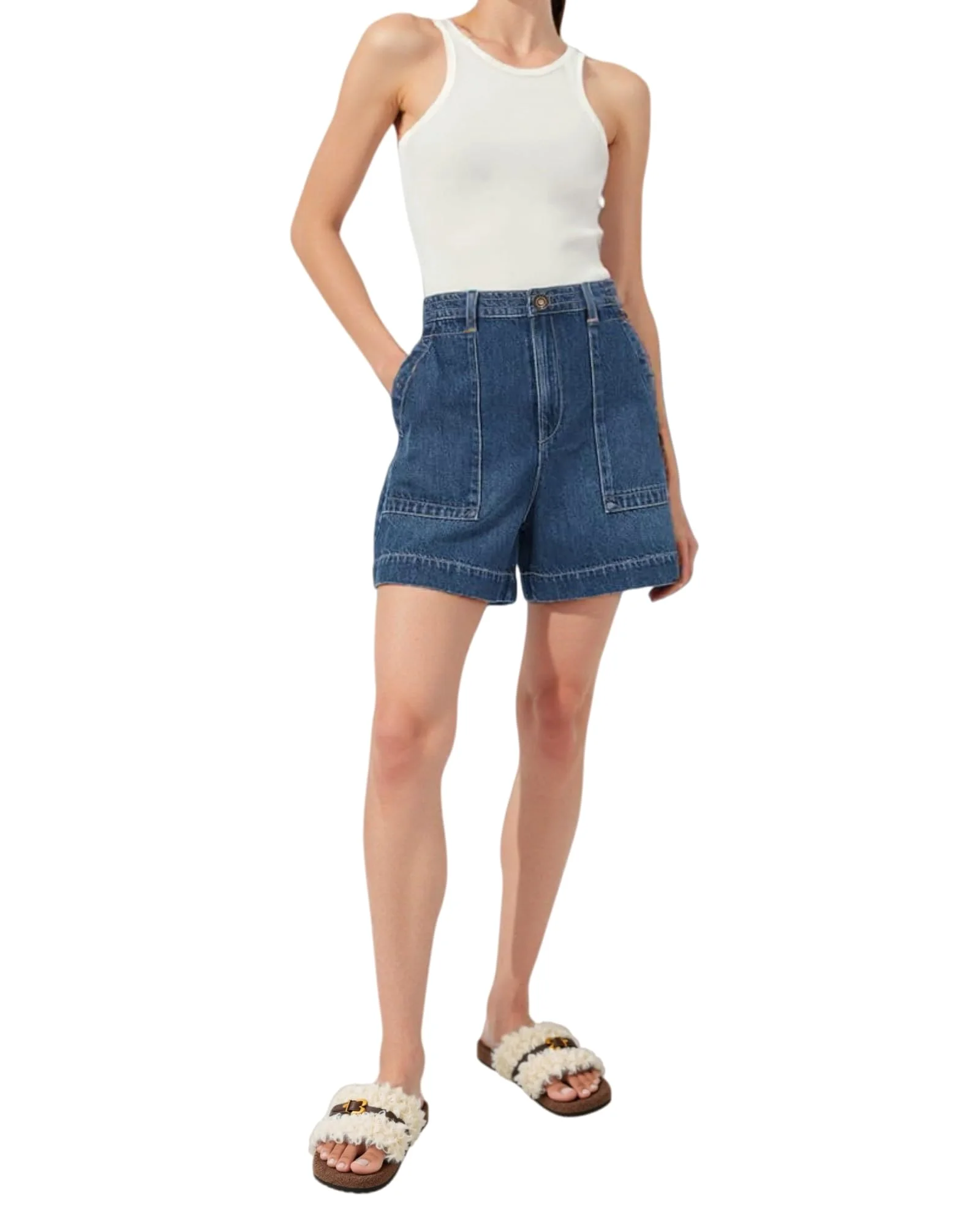
LuminBlaze High-Waisted Baggy Jort
Jorts · 70% cotton, 20% polyester, 10% rayon · 1 wash
From $14.99Our women's jorts stop at Bermuda length, near the knee, and they come in two rises. The high-waisted pair sits at the natural waist and opens slightly toward the hem, with patch pockets on the front. The mid-low waist pair rides lower on the hip and falls to a roomier leg.
The high rise pair looks sharp with a fitted tank or a cropped tee tucked in, because the waistband is part of the look. The mid-low pair pairs naturally with a baby tee or a cami that leaves a little space at the hip. Both work with flat sandals as well as sneakers.
How to judge length before you order
You cannot try on a jort through a screen, but you can get close.
- Find the knee on a pair you own. Put on shorts or jeans, stand straight and mark where your kneecap starts with a strip of tape.
- Decide where you want the hem. Just above that mark gives the classic jort, below it gives the long jort look.
- Look at the photos with that in mind. Our product photos show each pair worn, so you can see where the hem falls on the model's leg relative to the knee.
- Choose your waist by measurement, not by length. A bigger waist does not make a jort longer. It makes it lower, and a jort that slides down your hips changes where it ends.
What about the frayed jort?
Our rhinestone frayed jort is a knee-length cut with a distressed hem. A frayed edge adds a little visual length, because the loose threads blur the line where the denim stops. If you are between the two looks, a frayed hem at the knee sits nicely in the middle.
The belt question
Many baggy jorts in photos are worn with a belt, and it is tempting to copy that. Treat the belt as styling rather than as a way to hold a waist that is too large. Our washed loose jort is sold without one. Buy the waist you measure, and a belt becomes a choice instead of a necessity.
Unsure about a waist size, an inseam or a wash? Write to lowrise@luminblaze.com and everyone at LuminBlaze will answer.