
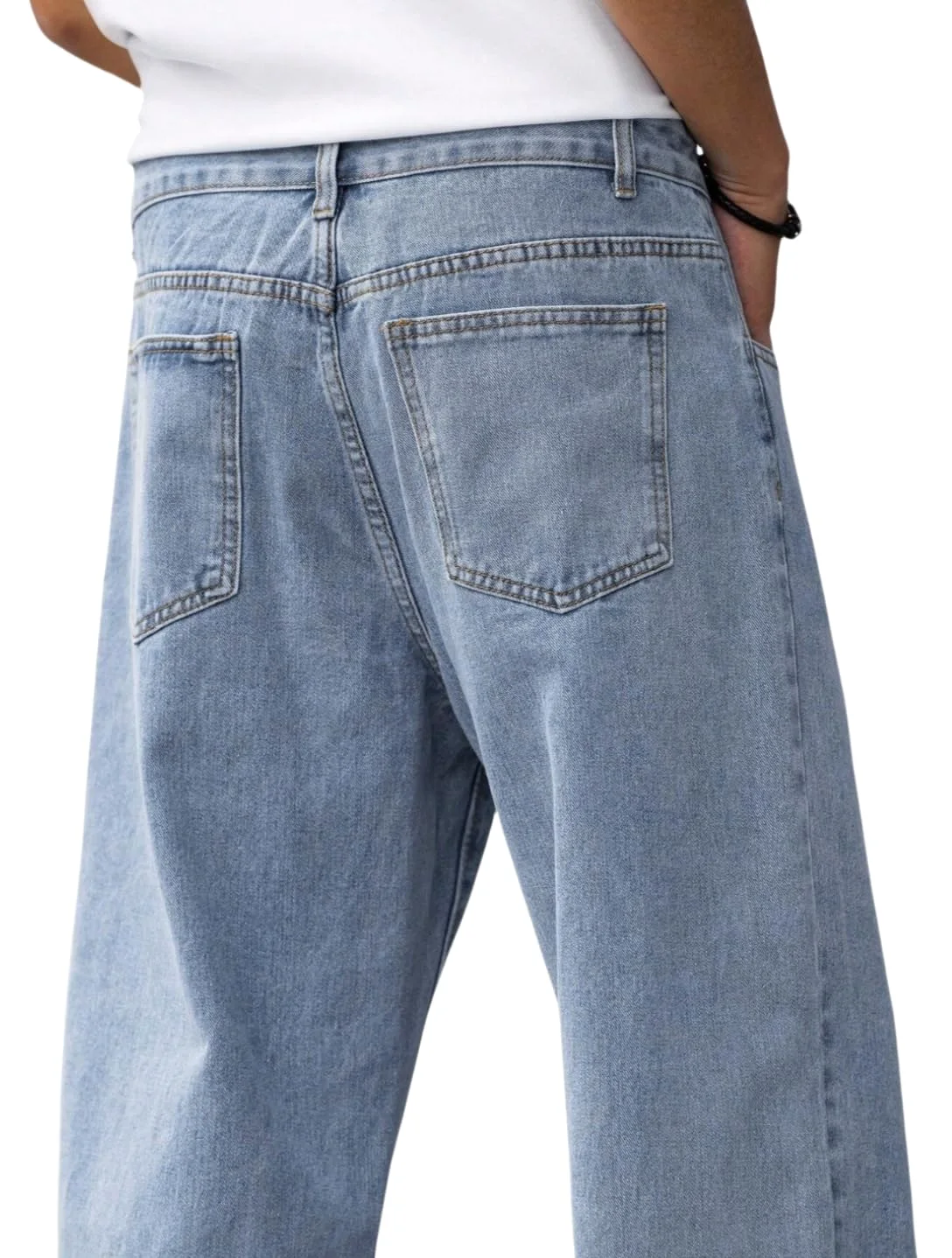
Baggy jeans have a strange reputation for sizing. People assume that a loose jean means a loose waist, so they order two sizes up and hope. The pair arrives, the leg is wide enough, and then the waistband stands off the back of their hips like a gate. A belt pulls it in, the fabric bunches, and the pockets slide toward the knees.
The fix is simple, and it starts with reading the size label as two numbers instead of one.
What the two numbers on a men's jean mean
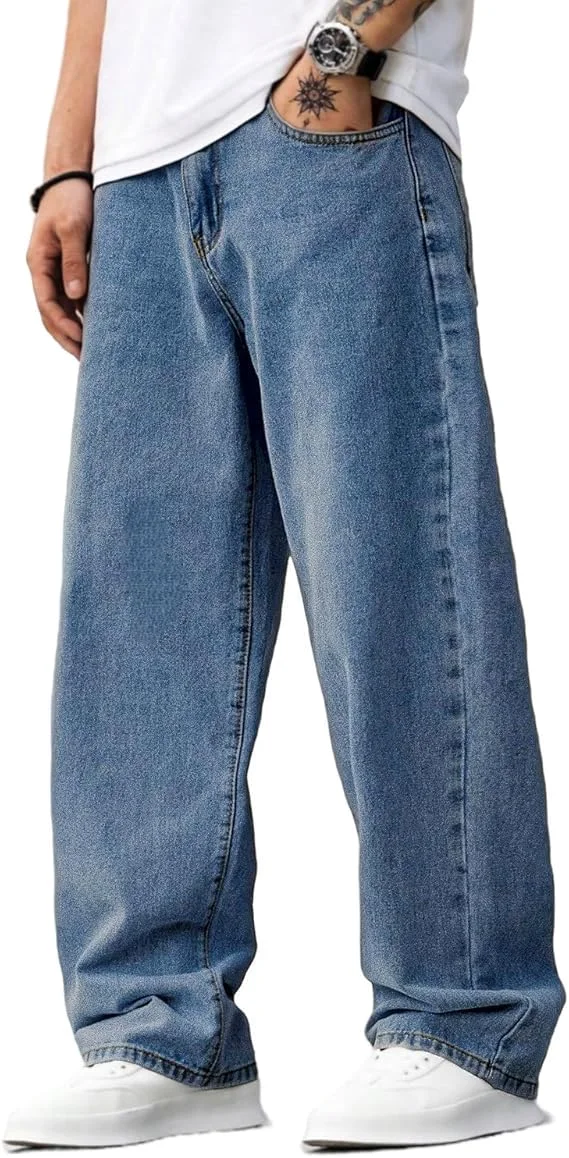
LuminBlaze Carpenter Baggy Jean
Baggy jeans · 73% cotton, 18% polyester, 9% viscose · 4 washes
From $28.99A size written as 32x30 is a waist and a leg. The first number is the waist in inches. The second is the length of the leg, measured along the inside seam from the crotch to the hem. They are separate measurements, and a jean can pair the same waist with a shorter or a longer leg.
Our carpenter jean shows how that works in practice. Waists 30, 32 and 34 come with a 30 inch leg. Waists 36 and 38 come with a 32 inch leg. So a 32x30 and a 36x32 are not the same jean in two sizes. They are two waists and two leg lengths.
There is a third number hiding behind those two, and it matters most for a baggy fit. Our size tips give the body waist each size is meant for, and then the waist of the jean itself. A 32x30 is cut for a 32 inch body and measures about 33.5 inches around. That inch and a half is ease, the room that lets the jean sit relaxed instead of tight. The looseness you see in the thigh comes from the pattern, not from buying a waist that is too big.
Measure where the jeans will sit
Your body waist is not a single fixed spot. It is wherever the waistband ends up. Most men wear a baggy jean a little below the navel, and that is where the tape goes.
- Stand the way you normally stand. Do not pull your stomach in, and do not slouch either.
- Wrap a soft tape around your body at the height of your usual jeans. Keep it level all the way round, especially at the back.
- Slide one finger under the tape and read the number. That finger is the room you will want when you sit down.
- Match the number to the waist on the size list. If you land between two, the larger one is usually kinder in a cotton jean.
If you already own a pair that fits the way you like, measure that instead. Button it, lay it flat, and measure straight across the top of the waistband. Double the number. That tells you the garment waist you are used to, and you can compare it with the garment waist in the size tips.
Why a bigger waist does not make a better baggy jean
It is tempting to think of waist size as a volume knob. Turn it up and everything gets looser. In practice only a few things grow when you size up: the waistband, the seat and the rise. The leg does get a little wider, but not in proportion, and the extra fabric gathers at the top of your body rather than falling down your leg.
The result looks like a jean that belongs to someone else. A baggy cut in your true waist looks deliberate. The waistband sits flat at your back, the seat follows your shape, and the leg drops straight past the knee and folds once over your shoe. That fold at the hem is what a good length gives you. It is also why the leg length number matters.
Getting the length right
Take the inseam of a jean you already wear, measured from the crotch seam to the hem with the leg laid flat. Compare it with the second number of the size you want. A leg that is an inch or two longer than your usual inseam stacks gently over a chunky sneaker. A leg that matches it exactly lands clean at the top of your shoe.
On a baggy jean, a little extra length usually looks right, because the wide hem has room to fold. On a slim jean, the same extra length would crumple. If you are shorter and the only length on offer feels long, a single cuff at the hem is an honest fix, and it suits a carpenter jean well.
Women's jeans use a single number
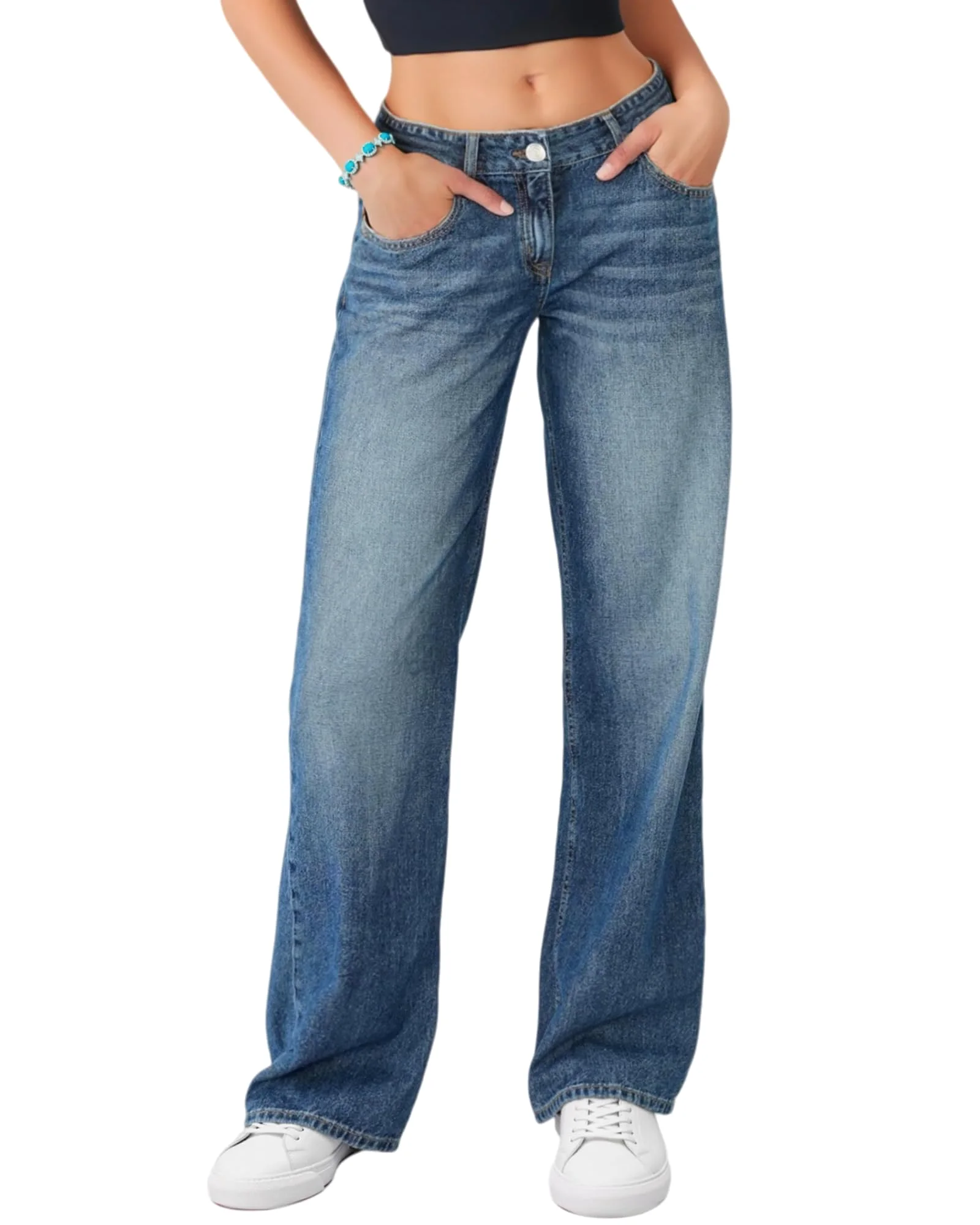
LuminBlaze Low Rise Baggy Jean
Baggy jeans · 70% cotton, 20% polyester, 10% rayon · 1 wash
From $34.99Our women's jeans skip the waist by length format and use US sizes. Each size steps up one inch at the waist. A size 2 fits a 26 inch waist, a 6 fits 28, a 10 fits 30, and a 14 fits 32.
The rise tells you where to measure. For a mid rise pair, such as our boyfriend jeans, measure at your natural waist, the narrow point you find when you lean to one side. For a low rise pair, measure a few inches lower, on your hips, where the waistband will actually rest. That number is usually an inch or two larger than your natural waist, and it is the one that belongs next to the size list.
Our low rise baggy jean lists its inseam, 30 inches. That gives you a direct comparison with a pair you own, the same way the second number does on a men's jean.
A quick check when the pair arrives
Put the jeans on, close the zip and sit down in a normal chair. The waistband should stay flat at your back without cutting in at the front. Stand up and look at the hem: one soft fold over your shoe is what you want. Then walk a few steps. If you find yourself pulling the waist up, the waist is too big, not too baggy, and the next size down will look better.
Unsure about a waist size, an inseam or a wash? Write to lowrise@luminblaze.com and the people at LuminBlaze will answer.